The Malaysia Study Visit has been reported on in the latest edition of 'Leadership Matters'.
Leadership Matters
Wednesday, 15 July 2009


Sunday, 12 July 2009
Sri KDU High School


Mrs Chang showed us through from the primary school following our excellent buffet and we crossed the University style campus over to the Socndary school. Here, as with the primary, the facilities were impressive; characterised by wide, cool corridors with hundreds of rooms, many of which appeared empty, a sign of the space available in Malaysian school system. We were later to find this was not exclusive to the private schools, but also in the rural schools. In the UK, this sort of space is a luxury unheard of!
We met with the management team before embarking on the school tour. The children were still on their lunch hour for part of the tour so we had the opportunity to see them making the most of their facilities; badminton, table tennis and other sports were all going on informally.
The school have recently introduced the International Baccaulaureate programme and IB students were busy at work using their state of the art library. Here the students have the non uniform status that sixth formers aspire to back home. The secondary students shared the smart uniform of their primary counterparts with even the socks being Sri KDU issue with stitching with the school's name on.
The facilties continue to impress us along our tour; drama rooms, swimming pool and sports facilities accomodating all known team sports. There was even a drumming studio with full drum kits set up. The teachers are keen to share their enthusiasm for the school with us.
We then split into groups to see a number of lessons, on offer we are invited to Science, Maths, English and Madarin. Myself and Nikki go into a year 9 maths lesson. The students are hard at work as we enter and they stand to welcome us 'Good afternoon teachers'. The desks all face the front and they are working on plotting algebraic functions on graphs. They were all very studious as we moved round to talk to them, they appeared shy and a bit nervous at our attention. We consider how this lesson is not dissimilar to maths lesson you would expect to see in high schools in the UK; there is use of the intereactive whiteboard and some paired discussion during the independent work. This is more interactive than the chalk and talk we may have expected. Although following the primary science lesson I had observed at Sri KDU primary earlier that morning, where meal worms were being examined with magnifying glasses to teach the topic of life cycles, that myth had already been dispelled.
After our short lesson visit we return to the meeting room where a forum had been set up. This is a very interesting element ot our visit. We have the opportunity to sit in small gorups with staff, school leaders and students themselves. I sit with Azhar Abdullah, the IB Business and Management teacher and one of the students, a very articulate young man who is very enthusiastic about both his school and on expressing his views on the Malaysian education system. Both are very interested in hearing Liana and me share our views on what we have seen and on our comments on the obvious differences we have observed.
What comes across most clearly is the extreme pride both teachers and students share in their school. Whilst in any formal set up such as this, the students would be carefully handpicked, it is difficult to be anything other than impressed with the caliber of this student and the way he articulates his comments on the issues being discussed. We talk about the issue of language and multi-cultural society in Malaysia which is so beyond where we are in the UK. They are interested that in the UK we are now assessed in Ofsted terms on the effectiveness of our Community Cohesion provision. We also share our awe of the Malaysians' approach to language learning.
Here the majority of students are Chinese Malaysians and many speak English at home. We had learn fromHugh that Chinese Malaysians make up some 30% of the Malaysian population. This is an interesting statistic in terms of what percentage is being represented here in a private school. Languages here may be less of an issue than in other Malay schools we visit later in the week but we must give them credit for the range of other languages they have on offer. We have already seen students in a language lab learning Mandarin at primary level.
Following the forum, Mrs Chang made some closing comments and Caroline presented the school with our gifts. We were delighted to receive gifts ourselves with momentos of the school for us to take away with us. as we leave I manage a photo opportunity with two (I suspect polite rather than willing) students to have a photo with our school mascot to post on our school VLE. I regret not having done this at the primary school at this point as I m aware of how I am compromising their street cred, and my own, by having them pose with the stuffed toy!
We all leave Sri KDU excited that we have one Malaysian school visit under our belts and eager to learn more as the week progresses. The question of how this will compare with state schools is considered by all of us over the course of the evening.
Wednesday, 8 July 2009
Sri KDU
Sri KDU - http://www.srikdu.edu.my/main.php
Our first experience of Malaysian schools was Sri KDU Primary school, is a private school that follows the Malaysian National Curriculum.
My first impression of the school was how open and modern it looked, with the architecture maximising open spaces. This helped us in the very high humidity! We were greeted by Mrs Chan, the Principal of both the Primary and the Secondary schools. In our welcome briefing, we were told about the aims and the vision for the school, which was to nurture the mind, the heart and the soul. From this they aimed to develop learners with Malaysian hearts and global minds.
Mrs Chan was keen to share with us her education philosophy of interactive teaching through group work and presentations. From this, she hoped pupils would be better placed as they entered the work place, with the confidence to offer opinions and conduct presentations. In light of this, the school offered character building programmes to embed values and promote positive attitudes.
At this point, I think I speak for the group when I say that we were very keen to have the opportunity to get into the classrooms, speak to the pupils and teachers, and actually get a taste of the Malaysian school. Up to this point, our induction sessions had set the scene and we were desperate to actually experience it. We all leapt up eagerly when the headteacher of the primary school, Mr Roderick, offered us the opportunity to split up and visit various lessons.
I chose to visit an English class of pupils who were nine and ten. The lesson was fascinating to observe, both in the similarities as well as the differences. When we entered we were greeted by twenty beaming faces, all of whom stood behind their chairs and chanted loudly “Good morning teacher!” It was a phrase that became very familiar over the next few days! The children were sitting in pairs facing the front of the class, where the lesson was being delivered through an interactive whiteboard.
The objective of the lesson was plurals, and it followed a fairly standard Literacy hour format. It was the first experience of a Malaysian classroom, and the children certainly impressed us with their bright enthusiasm. One of the key differences was the use of children chanting instructions and answers and every time the children were asked to read or recite, they did loudly and clearly.
We then joined back with the rest of our group for the tour of the school, the highlight of which was the ballroom dancing lesson - yes, ballroom dancing! It was wonderful to watch the professional dance instructor leading the class in the Cha-cha-cha. We were able to see the incredible facilities, including a swimming pool, tennis courts and drama studio. One very noticeable difference, was the teams of cleaners who did an fantastic job constantly cleaning the building, ready to sweep a leaf aside the second it swirled to the floor.
After our tour, we were then invited to a delicious buffet, where the school prefects sternly kept other pupils away (which was a shame, as we would all have enjoyed a further opportunity to chat to the children). This relaxed lunch allowed to ask the teachers about their school. One element which greatly impacted on me, was the pride that was taken in their school, whether through academic achievement or winning various competitions. This was reflected in the prefect system, which was very evident in every school that we visited through the week. The prefects were very important members of the school community, who were developing early leadership skills and the ones who I spoke to were very proud of their responsibilities.
We left Sri KDU primary with an insight into how the private education system functioned in Malaysia and eager anticipation to compare this with the rest of the schools to be visited during the week.
Sunday, 5 July 2009
SK Menjarala Primary School


On our fourth day we visited an average sized primary school on the outskirts of the city. The group were given the opportunity to split to focus their visits, half of the group spent the morning at the primary base and the other half at the secondary base.
We received a very warm welcome and were shown around the school by the senior leadership team. The school has 350 pupils, 28 rooms, 12 classes and their year groups are streamed and taught in ability groups. There is also a pre-school unit attached to the school where the children start from the age of 6.There was a real sense of space and warmth about the school. The children were very enthusiastic to meet us and asked lots of questions!

A large part of our reflection was focussed on the strong sense of moral teaching and the importance of values. The school have their own song which talks about groups, team work, family units, working hard and the children talked about this with pride.
It was interesting for us to note that the senior leadership team was male dominated, which was very refreshing. The Malaysian Education system is similar to the English in the sense that there are many more female primary teachers than male. The SLT were proud to show us around their school and appeared to have a good working relationship with the rest of the staff.
During our visit we impressed to observe the busy lunchtime environment, the children were all eating in a very sociable manner and were encouraged to take responsibility for tidying up their space. There were also food triangles on the tables to help children make healthy food choices.

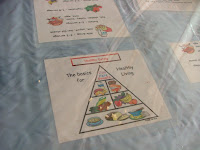


The pre-school was a real highlight for us, the children were delightful and ery excited to perform a song and dance for us. Their teacher was very enthusiastic and appeared to be very dedicated to her job. The children has a very well resources classroom with lots of exciting games and objects for counting and learning. The displays were of the brightest that we observed in any of the schools. The children were extremely happy and their environment was bright and busy.


The teaching and learning was quite different from that in England, still very chalk and talk, however the school leaders were forward thinking and were aware that the move to group work and indepenent learning was important.


The school was a thriving community of happy children, hard working staff and strong morals. The visit was a wonderful experience and the warmth of the staff and pupils will be remember by us all.
Monday, 29 June 2009

Sunday, 28 June 2009
Nikki's reflection
I have always viewed the Fast Track teaching programme as being an excellent opportunity to broaden my skills, experience and leadership abilities, particuarly with the access to the residential training which is exclusively for Fast Track Teachers. When I was invited to be part of the Malaysia study visit with CfBT and LECT I was delighted as I have always been interested in International links and am always looking for experiences to develop as a professional and a person. The visit came at a particulary ideal time for me as my role in school was becomming very demanding (yes teachers do work hard!) and I was feeling as though everything I did was 'just in time' always trying not to trip over!
The main outcome for me, besides the wonderful insight into the Malaysian Education system, was the realisation of how hard I have worked over the past 4 years and the impact this has had on me as a professional. The daily challenges and very busy terms had left me unable to reflect on my performance and I lacked the ability to be proud of my achievements. Spending time with like-minded, successful professionals also gave my motivation a boost and although I am exhausted, I have a refreshed vision on my career for the future.
Visiting the schools was extremely interesting, from this I will take away many many aspects and memeories. I was particularly impressed with the philosophy and ethos of the schools, placing an importance on developing the 'whole child' within an education system which is standards driven. The quotes and mission statements were not only on display, but fully shared with the staff, pupils and parents.
The respect and care for resources was first class and viewed as an important skill for children. Seeing the way libraries were presented, how children cared for their personal belongings and how staff presented their work spaces awakened me to the fact that in my school there is not the same ethos towards caring for the resources and environment. As part of our school improvement plan for next year, we will be looking at improving pupils personal development. I hope that I will be able to support our pupils in improving the way they care for their belongings.
The study visit was an emotional, informative and inspiring opportunity which I feel very lucky to have been part of. Being able to reflect on performance is so important in teaching if we want forward thinking leaders for the future. I will look back to the skills and knowledge gained on this trip in many years to come. I would highly recommend an experience such as this to anyone who is given the opportunity. Thank you.
The main outcome for me, besides the wonderful insight into the Malaysian Education system, was the realisation of how hard I have worked over the past 4 years and the impact this has had on me as a professional. The daily challenges and very busy terms had left me unable to reflect on my performance and I lacked the ability to be proud of my achievements. Spending time with like-minded, successful professionals also gave my motivation a boost and although I am exhausted, I have a refreshed vision on my career for the future.
Visiting the schools was extremely interesting, from this I will take away many many aspects and memeories. I was particularly impressed with the philosophy and ethos of the schools, placing an importance on developing the 'whole child' within an education system which is standards driven. The quotes and mission statements were not only on display, but fully shared with the staff, pupils and parents.
The respect and care for resources was first class and viewed as an important skill for children. Seeing the way libraries were presented, how children cared for their personal belongings and how staff presented their work spaces awakened me to the fact that in my school there is not the same ethos towards caring for the resources and environment. As part of our school improvement plan for next year, we will be looking at improving pupils personal development. I hope that I will be able to support our pupils in improving the way they care for their belongings.
The study visit was an emotional, informative and inspiring opportunity which I feel very lucky to have been part of. Being able to reflect on performance is so important in teaching if we want forward thinking leaders for the future. I will look back to the skills and knowledge gained on this trip in many years to come. I would highly recommend an experience such as this to anyone who is given the opportunity. Thank you.

SK PETASEH
It was a long journey, into the hills and rainforest, and at times the coach crawled its way up the winding roads, past landslides and water buffalo. Everywhere was fresh and bright, and there was evidence of replanting where logging had occurred. We were on route to SK Petaseh, a remote primary boarding school.
 Having toured the school, we went to the school hall, a large modern building with staged area, which would be the envy of UK primary schools and even some secondary schools. We were treated to a banquet including chicken in spicy sauce, noodles and delicacies such as curry puffs, rambutan (a spiky red fruit
  with juicy white flesh inside) and durian (a pungent fruit which seems to have an acquired taste!) Next there was a display of traditional music and dancing. One dance was about the moon and the kites, and two children were playing a bamboo instrument, where the tubes were rattled to make the notes. The performance was of a very high standard and I’m sure will be a lasting memory for us all.
Once again we met with a warm Malaysian welcome, and this time the receiving line included officials from the state education department and heads from other schools. Everyone was dressed in stunning batik clothing, which we learnt is always worn on Thursdays. I am uncertain whether this is a state or national initiative, but it is yet another example of how Malaysia creates a sense of belonging and pride. As with every school, the visi and missi and motto (vision and mission statements and school motto) were clearly on display throughout the complex. The Petaseh vision is “to become excellent and produce excellence” and its mission is "to develop a world-class quality education system which will realise the full potential of the individual and fulfil the aspiration of the Malaysian nation."
 The most striking feature of this school is the learning environment. Firstly, set on top of a hill, it has a panoramic view of the rainforest canopy and is cooled by a refreshing breeze. Secondly the buildings are bright and spacious. As the school is not full there is plenty of space in classrooms, and specialist rooms and spare rooms. In many areas the tables and chairs have silk valences in bright colours
 . The complex had also been freshly painted during the school holidays – a grant having made available because of our visit! Thirdly, the outdoor environment was brought into the school with plants and water features tucked in corners and courtyards. The school seemed very well organised and members of the UK team were particularly taken by the learning tables used in the library and religious instruction room. The table tops had news articles and other learning prompts covered with clear plastic.
There are separate boarding houses for the boys and girls. The girls’ block is set ar ound a courtyard, big enough to play. On the ground floor there is a recreation room with TV and video and a homework room, and then dormitories with bunk beds are on the floors above. There are two ladies looking after the girls, and when we visited their washing was pegged out at the back. As you might expect, many of the beds had a cuddly toy! The boarding fees are government subsidised and cost 1RM a day, the equivalent of 20p. Currently 100 boys and 47 girls are resident and they are drawn from many districts. Most are year 3 (our year 4) and above, but a few are younger, but from next year no younger pupils will be accepted. This is because the boarders are expected to be very independent. The children can see their parents twice a month.
The most striking feature of this school is the learning environment. Firstly, set on top of a hill, it has a panoramic view of the rainforest canopy and is cooled by a refreshing breeze. Secondly the buildings are bright and spacious. As the school is not full there is plenty of space in classrooms, and specialist rooms and spare rooms. In many areas the tables and chairs have silk valences in bright colours . The complex had also been freshly painted during the school holidays – a grant having made available because of our visit! Thirdly, the outdoor environment was brought into the school with plants and water features tucked in corners and courtyards. The school seemed very well organised and members of the UK team were particularly taken by the learning tables used in the library and religious instruction room. The table tops had news articles and other learning prompts covered with clear plastic.
There are separate boarding houses for the boys and girls. The girls’ block is set ar
 ound a courtyard, big enough to play. On the ground floor there is a recreation room with TV and video and a homework room, and then dormitories with bunk beds are on the floors above. There are two ladies looking after the girls, and when we visited their washing was pegged out at the back. As you might expect, many of the beds had a cuddly toy! The boarding fees are government subsidised and cost 1RM a day, the equivalent of 20p. Currently 100 boys and 47 girls are resident and they are drawn from many districts. Most are year 3 (our year 4) and above, but a few are younger, but from next year no younger pupils will be accepted. This is because the boarders are expected to be very independent. The children can see their parents twice a month.
In Malaysia, teachers are posted to schools rather than choosing to apply! This means it is commonplace to have a staff accommodation block. Being a rural area, many of the staff at Petaseh live on-site. In the main school there is a comfortable staffroom and large workroom with ceiling fans, where every teacher has their own desk. The office areas were also comfortable, attractive and highly organised, and we were all envious of the head teacher’s office. Her furnishings included an elaborate three piece suite around a coffee table.
The children were immaculately dressed, well-behaved and seemed very happy. Teachers took pride in telling us of their successes, including a year 4 boy and year 6 girl who had won state storytelling competitions and five students who have reached national level in football and hockey. The staff attribute these results to a greater emphasis placed on co-curricular activities in the first term of the year, before the academic focus kicks in as the year 6 UPSR tests approach. Like some other schools we visited, there was an impressive trophy cabinet.
The Head Teacher explained that the school year was 288 days, which is structured into two terms, with a mid-term holiday, a mid-year holiday and a final-year holiday. The four half terms were very similar in length. Each day the children have lessons from 7.45-1.35 and then 2.30-5. Afternoons were devoted to religious studies and co-curricular activities. In addition, on Saturdays and Sundays, 8.30-12, special government-funded tuition is available for pupils in years 4-6. No doubt this reflects the importance of the UPSR results. In 2008, 4.3% of pupils got 5As, which would give them a scholarship place to a state boarding school. Overall the data suggests Petaseh is a good school. I have based this judgment on the criteria we were given in Seremban for being part of the cluster of excellence - primary schools need an average of 80% plus across all subjects and a point average below 2. At Petasseh, in most subjects the 2008 results are in the high 80s and low 90s and most years the point score is 2 or 3.
This was the only school where I saw evidence of differentiation by task. The focus on a specific curriculum and test outcomes seems to remove desire or need for this. However, in one class the children were working around nested tables, doing a writing task in Bahasa, and the worksheets were clearly different levels. The teacher confirmed the children were seated by ability. It was a writing and spelling activity and I was amused to recognise the word “durian” on the board. I then learnt “bola” means ball – rather than, as I had thought, being the spelling for "boleh" which means "can do". Another example was the well resourced remedial room. Here a small group of children, who need to catch-up in Bahasa, were being taught. The children came to each of us, taking our hands and touching them to their heads, and then delighted in reading to us in Bahasa. They had laminated cards with a simple title and picture, and a series of simple sentences below. One was labelled chi-chi, but I cannot recall if this was about sheep or goats! The boys appeared to read confidently and fluently but, as Bahasa is such a phonic language, it was impossible to tell if they were reading with meaning. They certainly gave the impression they were enjoying learning. In another area of the room, a few older girls were working on a separate task. This part of the visit touched many of our hearts.
 Having toured the school, we went to the school hall, a large modern building with staged area, which would be the envy of UK primary schools and even some secondary schools. We were treated to a banquet including chicken in spicy sauce, noodles and delicacies such as curry puffs, rambutan (a spiky red fruit
  with juicy white flesh inside) and durian (a pungent fruit which seems to have an acquired taste!) Next there was a display of traditional music and dancing. One dance was about the moon and the kites, and two children were playing a bamboo instrument, where the tubes were rattled to make the notes. The performance was of a very high standard and I’m sure will be a lasting memory for us all.
 Being a truly rural school, where the majority of staff and children are Malay, English is not as widely spoken. In contrast to the urban primary schools, the school leaflet and website is in Bahasa, and the Head Teacher, Puan Latifah, had hours of special tuition to rehearse her extensive welcoming speech! The website is still worth a visit http://skpetaseh.50webs.com/ and by selecting “Kenali SKP(B)” then clicking on “Prasarana SKPB” or “Berita dan Peristiwa” it is possible to view slide shows of all areas of the buildings and events such as hockey tournaments in which the school has participated. In the “Akademik” section you can view the school’s data: with graphs and targets, and even individual pupil scores.
The visit ended with a lengthy photo-call, giving and receiving of presents and many good-byes.
Subscribe to:
Posts (Atom)


